The Agentic Divide: Is Google Missing the "Centralized Agent" Trick?
The AI landscape is splitting in two. On one side: centralized, autonomous agents that roam your entire digital life. On the other: Google, embedding Gemini into every product it owns while stopping short of a unified agent experience. The question worth asking isn't just "is Google behind?" It's "are they playing a completely different game?"
The Rise of the Digital Proxy
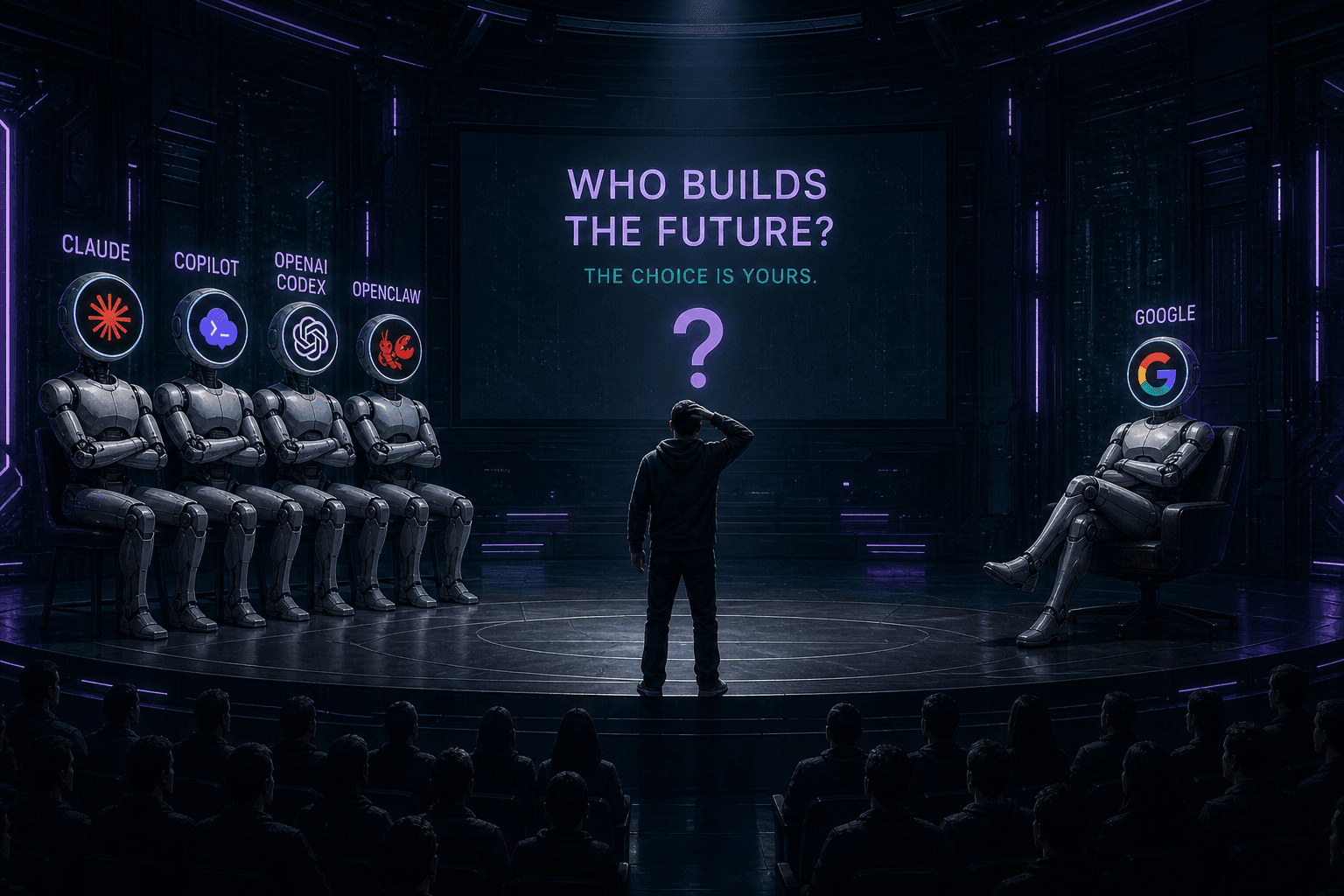
Anthropic's Claude, Microsoft's Copilot, and open-source projects like OpenHands are all built on the same core premise: the AI is a centralized extension of the user. Not a feature in a tab. An actual proxy.
These agents traverse your local desktop, open native applications, run terminal commands, and stitch together workflows across completely disjointed surfaces. You issue one command. The agent connects your Slack threads, local PDFs, browser research, and whatever else you've thrown at it. It feels cohesive. It feels like a digital coworker — not a toolbar.
Google's Surface-Level Silos
Google's current play is native embedding. Gemini lives inside Google Docs. Gemini lives inside Gmail. Gemini has OS-level hooks in Android and ChromeOS. Each surface gets its own AI upgrade.
To a power user, this feels fragmented. There's no central Google Agent you can point at your macOS file system, your local Obsidian vault, or your non-Google SaaS stack. Instead of bringing the agent to your workflow, Google asks you to execute your workflow inside Google's ecosystem — then it helps you there. For knowledge workers running a heterogeneous mix of local tools and cloud apps, that's a real limitation today.
The Infrastructure Bet: Factory Floor, Not Desktop Buddy
Here's where the analysis gets more interesting. Google isn't trying to win the desktop assistant race. They're trying to own the factory floor where custom agents get built.
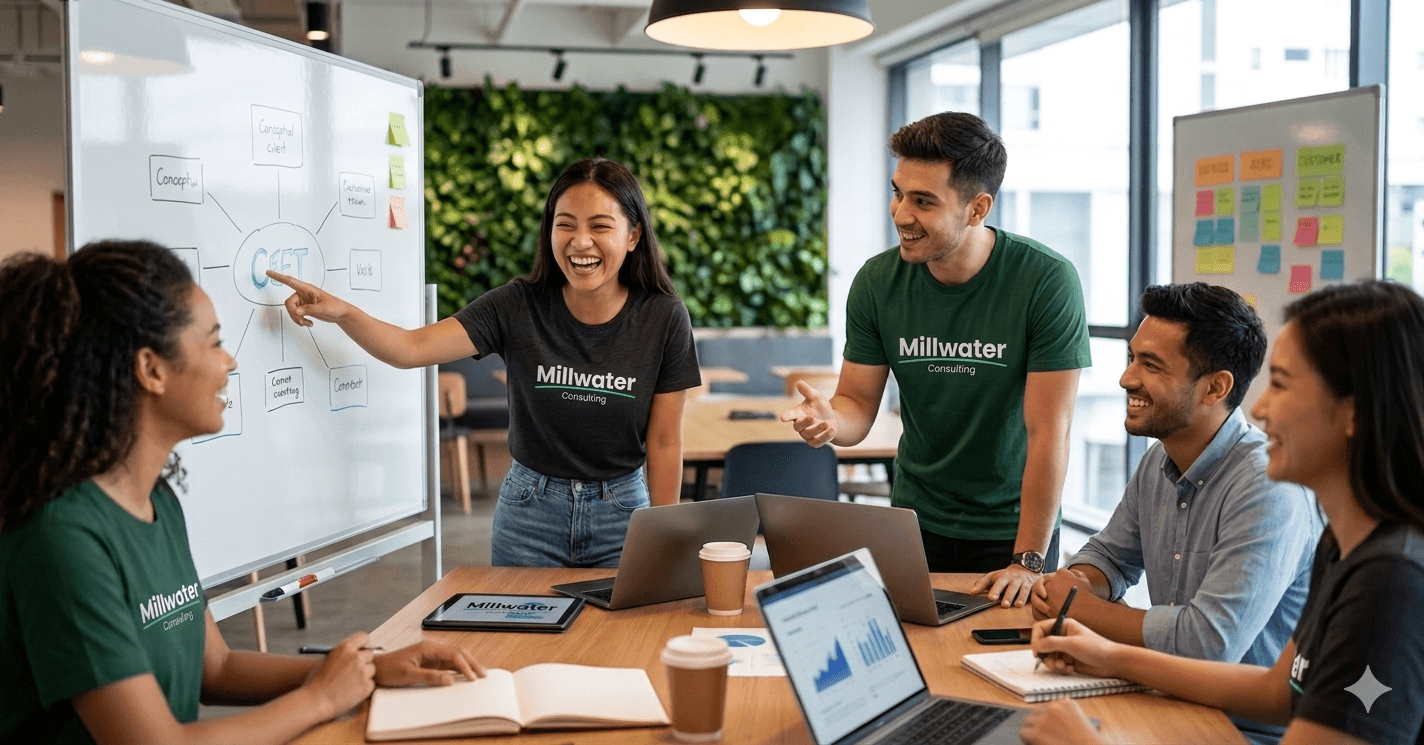
Think about what a professional services firm like Millwater Consulting actually needs at scale. A generalized desktop agent is powerful — until it hits the ceiling of proprietary workflows, internal databases, and compliance requirements. What you need then is a bespoke agent: built to exact specifications, tethered securely to internal data, deployed via strict APIs rather than screen-scraping a UI. No rogue tool calls. No hallucinated file paths. Auditable by design.
That's the bet Google is making with Vertex AI and the Agent Development Kit (ADK). They're not building you a digital employee. They're building the infrastructure so you can manufacture your own. NVIDIA is pursuing a parallel track with NIM Agent Blueprints — sandboxed, enterprise-grade open-source agents — but Google has the cloud scale advantage to make this stick.
The Wild Card: Google's Anthropic Stake
There's a counterargument that doesn't get enough airtime. Google has invested heavily in Anthropic. Claude — the most compelling centralized agent experience in the market right now — has Google capital behind it. It's entirely plausible that Google's strategy is a calculated split: let a nimble, opinionated product company capture the consumer and SMB agent market, while Google owns the enterprise infrastructure layer underneath.
If that's the play, Google doesn't need to win the desktop agent race. They're already backing the team that's winning it.
Gemini Agent: Too Little, Too Late?
Google did ship a response to the centralized agent trend — Gemini as a standalone agent experience. But the honest take is that it still feels like a product built from within Google's ecosystem gravity, rather than something designed to roam freely across your entire digital stack. Whether that changes as the ADK matures is worth watching. The architecture is capable. The product conviction is still catching up.
The Verdict
For the individual knowledge worker who wants one agent that handles everything, right now — yes, Google is missing the trick. The fragmented surface experience doesn't compete with what Anthropic and the open-source community are shipping.
But from an infrastructure standpoint, Google is playing a longer game. They're less interested in being your desktop buddy and more interested in being the platform your enterprise agent runs on. Add in the Anthropic investment, and they might have both bets covered.
The real question is whether the enterprise infrastructure play can land before the centralized agent players — Claude, Copilot, and the open-source wave — start pulling enterprise contracts out from under them.
That race is very much still on.
Practical takeaways:
If you're a knowledge worker or small team, the centralized agent tools (Claude, Copilot) are ahead on UX right now. Start there.
If you're building enterprise AI tooling, Google's ADK and Vertex AI are worth evaluating seriously — the infrastructure primitives are solid.
Don't sleep on Google's Anthropic stake. The "fragmented" narrative may be exactly what they want you to believe while they cover both sides of the market.
Whichever platform you choose: do it once, do it right. Switching costs on agent infrastructure are high.
— Rishi Prasad, Lead Full Stack Developer, Millwater Consulting https://millwater.consulting